When your brain won't let your body relax
You're with your partner. Things are heading somewhere intimate. And then it hits. That tight feeling in your chest. The voice in your head narrating everything. A sudden awareness of how your body looks from this angle. Whether you're taking too long. Whether they're getting bored. Whether this will work at all.
Your arousal doesn't vanish because you stopped wanting it. It vanishes because your nervous system decided you're under threat.
Performance anxiety during partnered sex is wildly common. It's also one of the most treatable arousal blocks, and a lemon clitoral vibrator is genuinely one of the fastest ways to work through it. Not because the vibrator magically erases anxiety, but because it shifts where the attention lives. Your body is still in the room with your partner, but your nervous system learns to focus on sensation instead of surveillance.
Why anxiety kills arousal in the first place
Here's the neurology. Arousal lives in your parasympathetic nervous system, the relaxed part. Anxiety lives in your sympathetic nervous system, the fight-or-flight part. You can't be in both systems at once. It's neurologically impossible.
When you're anxious about performance, your body is genuinely trying to protect you. It's preparing for a threat, even though the threat is imaginary. Your blood vessels constrict slightly. Your breathing becomes shallower. Your pelvic floor tightens. Everything your body does to run from a tiger now happens because you're worried you won't have an orgasm quickly enough.
The problem isn't the anxiety itself. The problem is that you're trying to have arousal and anxiety in the same body at the same time. One of them has to lose.
How a lemon vibrator rewires the focus
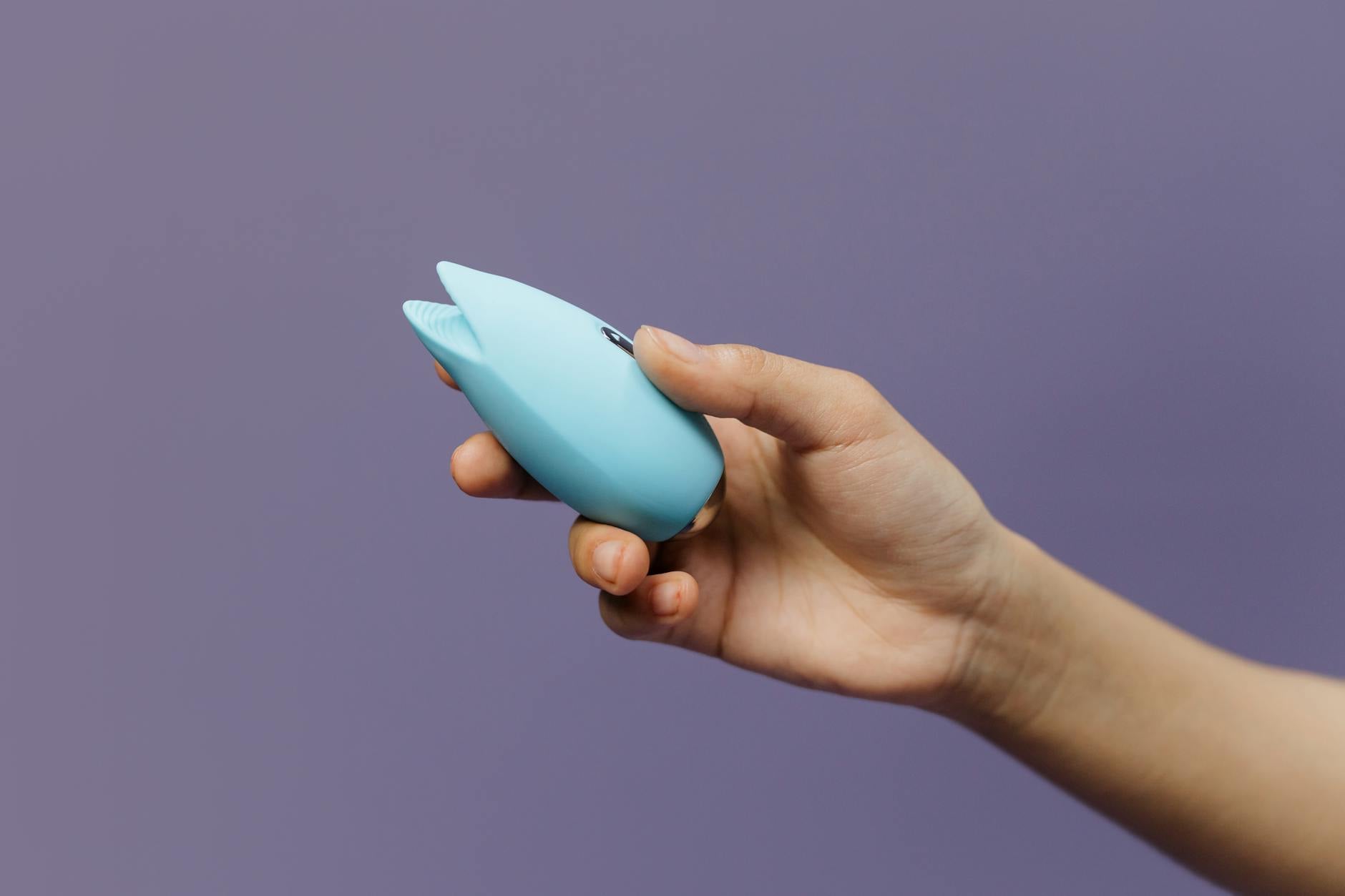
A lemon sucker like the Lem works differently than other vibrators for this specific problem. The suction sensation is localized, intense, and almost impossible to ignore. When you use it, your brain has to pay attention to what's happening, not to what you're worried might happen.
This is called "interoceptive awareness." Your nervous system learns to track actual sensation instead of projected fear. Over time, your body learns that pleasure doesn't require perfect conditions or flawless performance. It requires attention. And you control the attention.
Using a lemon clitoral vibrator during partnered sex isn't a workaround. It's retraining your nervous system to trust that you're safe enough to feel good.
The setup that actually works
Talk to your partner first. Not a clinical conversation. Something like: "I've been in my head during sex lately, and I want to try something that helps me get back into my body. Can we try using a vibrator together?"
Most partners who love you will say yes immediately. Some will ask questions. Answer them honestly. This isn't about them being inadequate. It's about your nervous system needing permission to relax.
Start with solo practice. Before you bring a lemon vibrator into partnered sex, spend three or four solo sessions getting comfortable with it. Find the patterns and intensities that feel good without any performance pressure. Let your body learn what relaxation feels like with the device.
When you do bring it into partnered time, start slowly. Your partner can be present, touching you elsewhere, talking to you, or just there. You hold the lemon vibrator. You control the speed. You choose the intensity. This is critical because control is what anxiety steals. Taking it back is how your nervous system learns you're safe.
The patterns that calm your nervous system
Don't jump to high intensity. Start at pattern 1 or 2 on the Lem. Let your body register sensation without shock. Slow arousal is actually more grounding than fast arousal when you're working with anxiety.
Stay with one pattern for a full minute before changing. Your nervous system needs time to recognize that nothing bad is happening. Each pattern your body adjusts to teaches it: safe, safe, safe.
Breathe deliberately. Anxiety tightens breathing. When you notice you're holding your breath, slow your exhales. A five-second inhale, seven-second exhale does something real. It signals your parasympathetic nervous system that the threat has passed.
If your mind wanders to performance thoughts, don't fight them. Notice them, and return to sensation. "Okay, that worry is there. And also, this pattern feels warm and focused." Your brain can hold both at once. The goal isn't to eliminate the anxiety. It's to make sensation louder than worry.
What to do if anxiety spikes mid-session
Sometimes, even with the best setup, your nervous system will trigger. You'll feel the freeze starting. Your arousal will drop. This is completely normal and does not mean you're failing.
Stop. Not permanently. Just pause. Tell your partner: "I need a breath." Use a lemon clitoral vibrator on a very low setting while you reset. Focus only on the sensation. Let your partner know you're okay and you'll keep going when you're ready.
If your partner asks what they can do, tell them. "Just hold my hand" or "Talk to me" or "Give me quiet." Your needs change. Asking for them is the opposite of performance anxiety. It's you saying: "I'm in control of my pleasure, and here's what I need."
If the anxiety doesn't settle, stop the session. This is not failure. This is your nervous system telling you it needs something different. Sleep on it. Try again another time. Your body isn't broken. It's communicating.
The long game: rebuilding trust in your own pleasure
Anxiety-blocked arousal isn't usually about your partner or even really about sex. It's about internalized pressure. You've learned, somewhere, that your pleasure should be automatic, fast, and responsive to someone else's timeline. That's the belief your nervous system is protecting you from.
Using a lemon vibrator during partnered sex teaches you a different story. That your pleasure is available. That it's worth the time it takes. That you deserve attention, including attention from your own body.
Over weeks, most people notice the anxiety loosens. Not because the vibrator is magic, but because your nervous system has had repeated evidence that sensation is safe, that slowing down works, and that asking for what you need makes you more attractive, not less.
Partner sex doesn't have to include a vibrator forever. Many people find that after they've rebuilt trust in their own arousal, partnered sex becomes easier without it. But some keep using them because they feel good, and that's equally valid. Your pleasure isn't a gateway to something else. It's the point.
When to reconsider your broader relationship
Here's the honest part: if your anxiety during partnered sex comes from not feeling emotionally safe with your partner, a lemon vibrator won't fix that. A vibrator can help you access pleasure despite anxiety. It can't make your nervous system trust someone you don't actually trust.
If you find that anxiety remains high even with the vibrator and all these tools, it might be worth asking: Do I feel safe with this person? Do I feel heard? Do I feel like my pleasure matters to them? If the answer is no, the work isn't nervous system retraining. It's relationship recalibration, possibly with a therapist.
But if the answer is yes, and the anxiety is just stuck patterns your system developed, a lemon clitoral vibrator genuinely can help you rewire it.
FAQ: Performance anxiety and lemon vibrators
Can using a vibrator during partnered sex make my partner feel inadequate?
Most people who care about you understand that your pleasure isn't a referendum on them. If your partner feels threatened by a vibrator, that's worth a conversation outside of sex. Something like: "When I use this, I'm not saying anything about you. I'm saying I need this for me right now." If they can't move past that, couples therapy might help clarify what's really underneath the resistance.
How long does it take for anxiety-blocked arousal to improve with a vibrator?
Most people notice a shift within two to four weeks of consistent practice. Your nervous system learns quickly when it has clear signals that it's safe. But everyone's timeline is different. Some people need longer. That's not a problem. Keep practicing.
Is it normal to need a vibrator every time we have sex if I'm working through anxiety?
No, and many people don't. The vibrator is a teaching tool. Your nervous system learns from it, and eventually, you often can access arousal without it. That said, some people just prefer using a lemon vibrator because it feels good. Neither path is wrong.
What if my anxiety is about my body image, not performance?
Body anxiety and performance anxiety are cousins. Both pull your attention away from sensation and into judgment. A lemon vibrator helps because it keeps your attention on what you're feeling, not what you look like. Dimmed lighting, being on top, or other positioning changes can also help. But if body anxiety is severe, working with a therapist might be the core move.
Can I use a lemon vibrator if I'm on antidepressants that affect arousal?
Yes. Medication-related arousal changes are separate from anxiety-blocked arousal, but a vibrator can help with both. The key is giving it more time and not pushing yourself. Talk to your prescriber if arousal changes significantly. Sometimes a dose adjustment or switching medications helps. Sometimes the vibrator is the accommodation you need.
Is it okay to rely on a vibrator during partnered sex?
Reliance isn't the right word. You're using a tool. You use a toothbrush to clean your teeth. You don't "rely" on it in a shameful way. You use what works. If a lemon clitoral vibrator helps your nervous system relax during partnered sex, that's a feature, not a bug.
The bottom line
Performance anxiety shuts down arousal because your nervous system genuinely believes you're under threat. A lemon vibrator can't argue with your nervous system. But it can give you repeated experiences of safety and sensation, which your body understands. Over time, your arousal returns not because the anxiety disappears, but because pleasure becomes louder than worry.
Your partner is there. You're together. And your nervous system finally learns: you're safe enough to feel good.
If anxiety is blocking your connection to pleasure, you don't need better willpower. You need tools that work with your body, not against it. We can help with that. Reach out at /contact if you want to talk through what might work best for your situation.