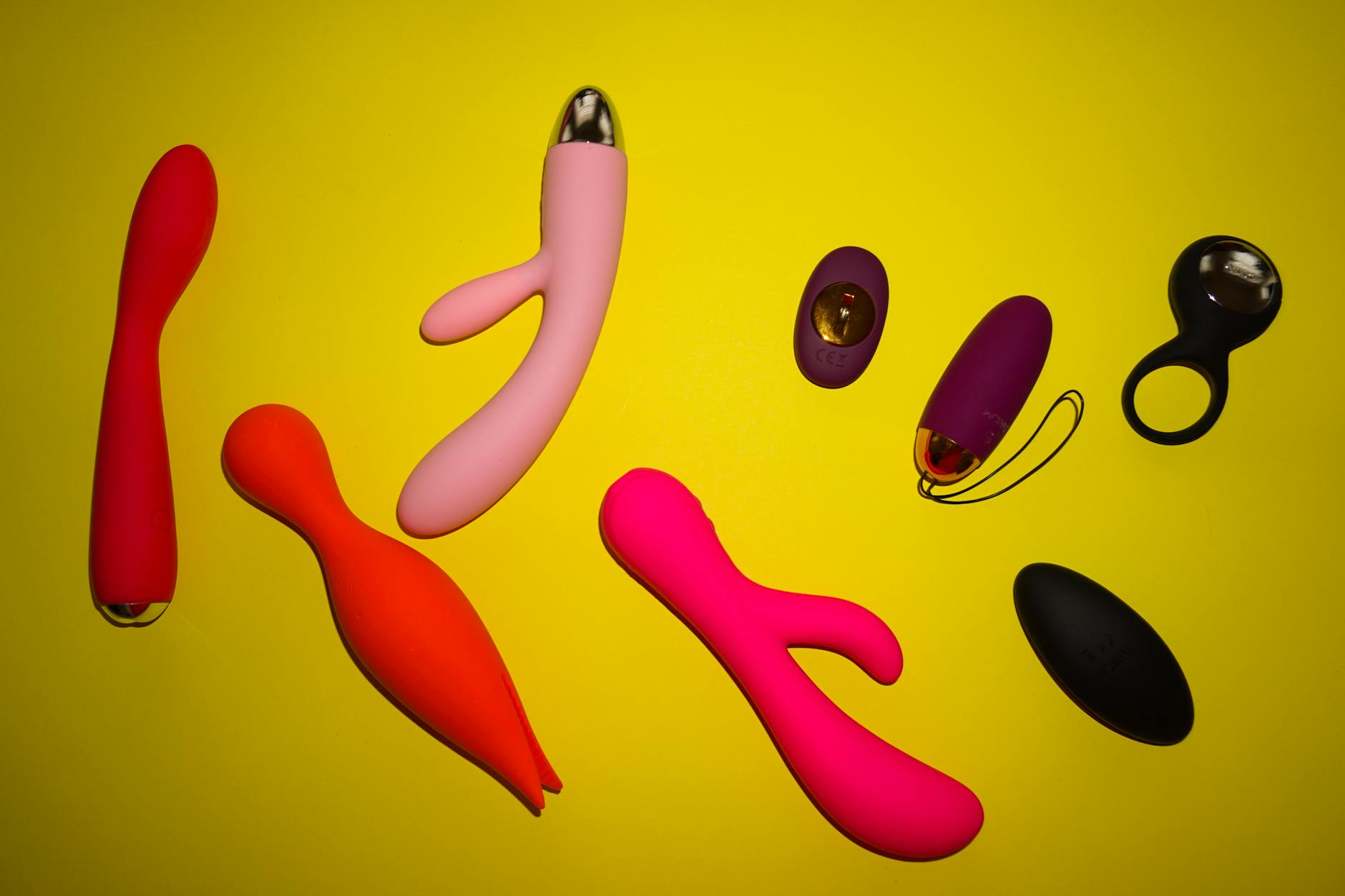
The medication you needed came with a side effect nobody mentions
You started the SSRI, or the allergy med, or the blood pressure medication. Health improved. Then sensation dropped, often completely. Your clitoris still has all its nerve endings. The problem is that the medication is muffling the signal between those nerves and your brain. That's not failure. That's neurobiology.
Here's what matters: this is usually reversible, sometimes quickly. And while you're waiting for your body to adjust or while you're working with your doctor on alternatives, a lemon vibrator can actually help retrain the pathway.
Why medication dulls clitoral sensation in the first place
Three main mechanisms:
SSRIs and SNRIs (antidepressants). These increase serotonin availability in your brain, which is great for mood. But serotonin also regulates the relaxation response, which directly affects blood flow and arousal. Decreased blood flow means less swelling in clitoral tissue, which means less sensitivity. It's a trade-off your nervous system makes.
Antihistamines and decongestants. These dry mucous membranes everywhere, including the genital area. They also reduce blood flow to tissues. If you're taking daily antihistamines for allergies, you're likely experiencing persistent drying and reduced engorgement.
Blood pressure medications, especially beta-blockers. These lower heart rate and reduce vascular response, which means less blood reaching the clitoris during arousal. No engorgement, no heightened sensation.
The paradox is brutal: the medication you need for your health sabotages the sensation you're trying to feel. That's not a reason to stop taking it without talking to your doctor. It's a reason to understand what's happening and then work with tools designed for reduced sensation.
Why a lemon vibrator is specifically useful for medication-dulled sensation
Unlike bullet vibrators or wand vibrators that rely on broad surface stimulation, a lemon clitoral vibrator uses air-suction technology. That matters here because suction creates a localized pressure change that stimulates the clitoral complex in a way that bypasses some of the reduced blood flow issue.
In plain terms: when sensation is dulled, you need stronger, more targeted input. A lemon vibrator delivers that without requiring you to apply direct mechanical pressure. You don't have to press harder (which can numb you further). Instead, the suction does the work.
The other advantage is that suction stimulation activates different nerve pathways than vibration alone. If your medication has dampened one route of sensation, suction can engage others. It's not a miracle, but it's a neurological work-around.
How to use a lemon vibrator when medication has numbed you
Start with expectation reset. You're not aiming for your pre-medication sensation in week one. You're aiming for detection. Can you feel the difference between pattern 1 and pattern 2? Can you feel anything at all? That's the goal.
Use a water-based lubricant generously. Medication often dries tissue (especially antihistamines). Lubrication isn't optional here. It's part of the treatment. Reapply midway through if needed.
Begin with the lowest intensity. Lemon vibrators typically have 5-7 intensity levels. Start at level 1. Spend 5-10 minutes there. Your nervous system needs time to recognize the signal. Slow wins here.
Stay for 2-3 minutes per intensity level. Don't chase sensation by jumping to level 5 immediately. The goal is to let your nervous system gradually register stronger input. This retrains the pathway without overwhelming it.
Apply directly to the external clitoris. Not the hood, not the surrounding area. The tip of the clitoris. The sensation is concentrated there, and that concentration helps you detect even muted feeling.
Do this 3-4 times per week. Consistency matters more than intensity. You're not trying to orgasm. You're trying to rewaken the nerve pathway. Some weeks you'll feel more than others. That's normal.
Why consistency matters more than intensity
Your nervous system is plastic. It can learn. But it learns through repetition, not through one intense session. If you use a lemon vibrator once, you'll probably feel nothing and think it didn't work. If you use it three times a week for three weeks, your nervous system starts remembering what sensation feels like again.
This is especially true if you've been numb for months. The nerve pathways are dormant, not dead. Gentle, consistent stimulation wakes them up faster than aggressive stimulation.
Many people also find that sensation returns suddenly, not gradually. You'll be numb for weeks, and then one session you'll feel something you haven't felt in months. That's the pathway reconnecting. It feels strange. It's exactly what you want.
When to talk to your doctor about medication alternatives
Your doctor needs to know that sensation loss is affecting your quality of life. Full stop. You don't have to frame it as a sex problem if that's uncomfortable. You can say: "The medication is working for my condition, but I've lost sensation in my genital area and it's affecting my wellbeing."
Good responses from your doctor:
- "Let's try a different SSRI. Some people experience less sexual side effects on alternatives like sertraline." (SSRIs vary. Switching sometimes helps.)
- "We could try adding bupropion to your current medication." (Bupropion doesn't cause sexual side effects and sometimes counteracts them.)
- "Let's lower your dose and see if sensation returns." (Sometimes a smaller dose works for your condition with fewer side effects.)
- "Have you considered switching to a different class of antidepressant?" (If SSRIs don't work, SNRIs or other classes exist.)
Bad responses that suggest you need a different doctor:
- "That's just a side effect, you'll get used to it." (No. You'll get more depressed.)
- "It's all in your head." (It's in your pharmacology.)
- "Stop taking the medication." (Never do this without medical supervision.)
The point: numbness is real, it's common, and it's worth addressing directly with your prescriber.
What helps while you're rebuilding sensation
Beyond the lemon vibrator, three things matter:
Stay hydrated and move your body. Dehydration worsens medication side effects. Movement increases blood flow. Walking, yoga, or any exercise that gets your heart rate up helps your nervous system remember what arousal feels like.
Be patient with timing. Sensation recovery isn't linear. Some days you'll feel more. Some days you'll feel nothing. That's not failure. That's your nervous system learning. Stay consistent anyway.
Consider whether the medication is truly the best fit. This isn't about stopping it. It's about having an honest conversation with your prescriber about whether this specific medication is the best option for you long-term. Sometimes there are alternatives. Sometimes there aren't. But you deserve to know you have options.
FAQ: Medication and sensation loss
How long does it take for clitoral sensation to come back after starting a new antidepressant?
Varies widely. Some people regain sensation within weeks. Others take months. Some adjust their dosage down and sensation returns quickly. Others find that sensation gradually returns over time as their body adapts. The timeline also depends on which antidepressant you're taking. SSRIs typically cause sexual side effects more often than SNRIs. If it's been three months with no improvement, talk to your doctor about alternatives.
Can a lemon vibrator actually help rebuild sensation, or is that just marketing?
It can help. Not as a magic fix, but as a tool for retraining the nerve pathway. Your clitoris still has all its nerve endings. The medication is dampening the signal. Consistent, targeted stimulation with a lemon clitoral vibrator can help your nervous system remember what sensation feels like. It won't work if you use it once. Consistency over weeks is what creates change.
What if I switch antidepressants and sensation still doesn't come back?
First, give the new medication 4-6 weeks to settle. Side effects sometimes resolve once your body adapts. If sensation is still gone after that window, talk to your doctor about adding bupropion or adjusting your dose. Some people also find that combining medication with targeted pleasure work (like using a lemon vibrator) helps retrain the pathway faster than medication changes alone.
Is it normal to feel nothing at all with a lemon vibrator the first few times?
Yes. Completely normal. If your medication has numbed you for months, your nervous system has essentially gone to sleep. The first few sessions might feel like nothing. That doesn't mean the tool isn't working. It means you're waking up the pathway. By session 8-12, most people detect some change. Patience is the real tool here.
Can I use a lemon vibrator while I'm on medication, or will it make things worse?
You can absolutely use one. In fact, using it while on medication can help your nervous system adjust. The suction stimulation doesn't interfere with how the medication works. It's just a tool that helps your body recognize sensation again. The medication needs to stay in your system at the dose your doctor prescribed. The vibrator just helps retrain sensation within that reality.
What if my doctor doesn't take medication side effects seriously?
Find a different doctor. Sexual function and sensation are legitimate health concerns. A doctor who dismisses them is not taking your wellbeing seriously. Look for providers who specialize in sexual health, or ask for a referral to a reproductive psychiatrist. You deserve a prescriber who listens.
Moving forward
Medication numbness is temporary and usually reversible, even though it doesn't feel that way when you're in it. A lemon vibrator isn't a replacement for talking to your doctor about alternatives or dose adjustments. It's a companion tool. Consistent use, paired with patience and honest conversations with your prescriber, brings sensation back.
Your pleasure matters. The fact that your medication is helping your mental health doesn't mean you have to accept permanent numbness. The two aren't in competition. Most of the time, you can have both. It just takes the right combination of information, tools, and support.
If you're ready to explore how a lemon clitoral vibrator can support your sensation recovery, or if you need guidance on how to talk to your doctor about medication side effects, reach out to our team at /contact.
Sources
Ariely, H., & Loewenstein, G. (2006). The heat of the moment: The effect of sexual arousal on sexual decision making. Journal of Behavioral Decision Making, 19(2), 87-98.
Farmer, M. E., et al. (2001). Sexual dysfunction in patients treated with cyclic antidepressants. Journal of Clinical Psychiatry, 62(22), 22-31.
Meston, C. M., & Frohlich, P. F. (2000). The neurobiology of sexual function. Archives of General Psychiatry, 57(11), 1012-1030.
Rosenberg, K. P., et al. (2003). The prevalence of sexual dysfunction in a sample of male patients on psychiatric medications. Journal of Sex and Marital Therapy, 29(S1), 59-68.