The gap between arousal and orgasm with a partner
Let's start here: not reaching orgasm during partner sex is wildly common and has nothing to do with your capacity for pleasure. About 75% of women never orgasm from penetration alone. Many people who orgasm easily solo have zero orgasms with a partner present, even when deeply attracted. This is not a sign of dysfunction. It's a sign of how your nervous system works.
The difference between solo pleasure and partnered pleasure isn't about love or desire. It's about neurological safety, attention, and the specific type of stimulation your body needs. A lemon clitoral vibrator bridges that gap without requiring you to fake anything or feel broken.
Why partner presence changes everything
Three physiological things happen when someone else is in the room.
First, your attention splits. Solo, your brain can stay locked on sensation. With a partner, part of your mind monitors their pleasure, your own performance, whether you're taking too long, whether they're getting bored. That background anxiety literally dampens arousal signals. It's not weakness. It's your brain doing exactly what evolution trained it to do.
Second, the stimulation changes. Most partner sex centers on penetration or friction that feels good for the penetrating partner. That's not the same as the consistent, focused clitoral pressure that most people with vulvas need to orgasm. A lemon vibrator delivers that specific sensation independently, so you're not hoping someone's motion will happen to match what your body actually requires.
Third, there's an invisible performance expectation. You know (consciously or not) that your partner is waiting for your orgasm. That pressure alone can block it. Solo, there's no deadline. You can explore without judgment. With a partner, even a loving one, the clock starts ticking.
None of this means anything is wrong with you or your relationship.
How a lemon clitoral vibrator changes the dynamic
A lemon vibrator removes the performance burden while keeping your partner in the moment. You're not faking. You're not pretending you're close when you're not. You're also not abandoning your partner or creating distance. You're actually bringing them into a more honest version of your pleasure.
The suction mechanism of a Lem vibrator works differently than traditional vibrators. It uses gentle air pulses that stimulate the clitoral complex without the intensity that can feel overwhelming. This matters because many people find that partner presence makes them more sensitive. What feels perfect solo can feel too intense with someone watching. A lemon sucker's adjustable patterns let you control the exact sensation without needing to explain yourself mid-moment.
When you introduce a lemon clitoral vibrator into partner sex, you're saying something specific: "I need this type of stimulation to reach orgasm, and I'm worth having that." That's not selfish. That's honest.
How to introduce it without shame or awkwardness
This conversation should not happen during sex. It should happen clothed, calm, when you're both awake and not trying to be intimate.
The frame matters. Not: "I can't orgasm with you." Instead: "My body reaches orgasm faster and more reliably with focused clitoral stimulation. I want to incorporate that into what we do together so we can both enjoy it." This keeps the focus on what works, not what's broken.
Many partners worry that a vibrator means they're not doing something right. You can head this off: "This isn't about you. This is about my nervous system needing a specific type of input. Like how some people need glasses to read. I'm not asking this because you're failing. I'm asking because I want more pleasure, and I want it with you." That distinction is everything.
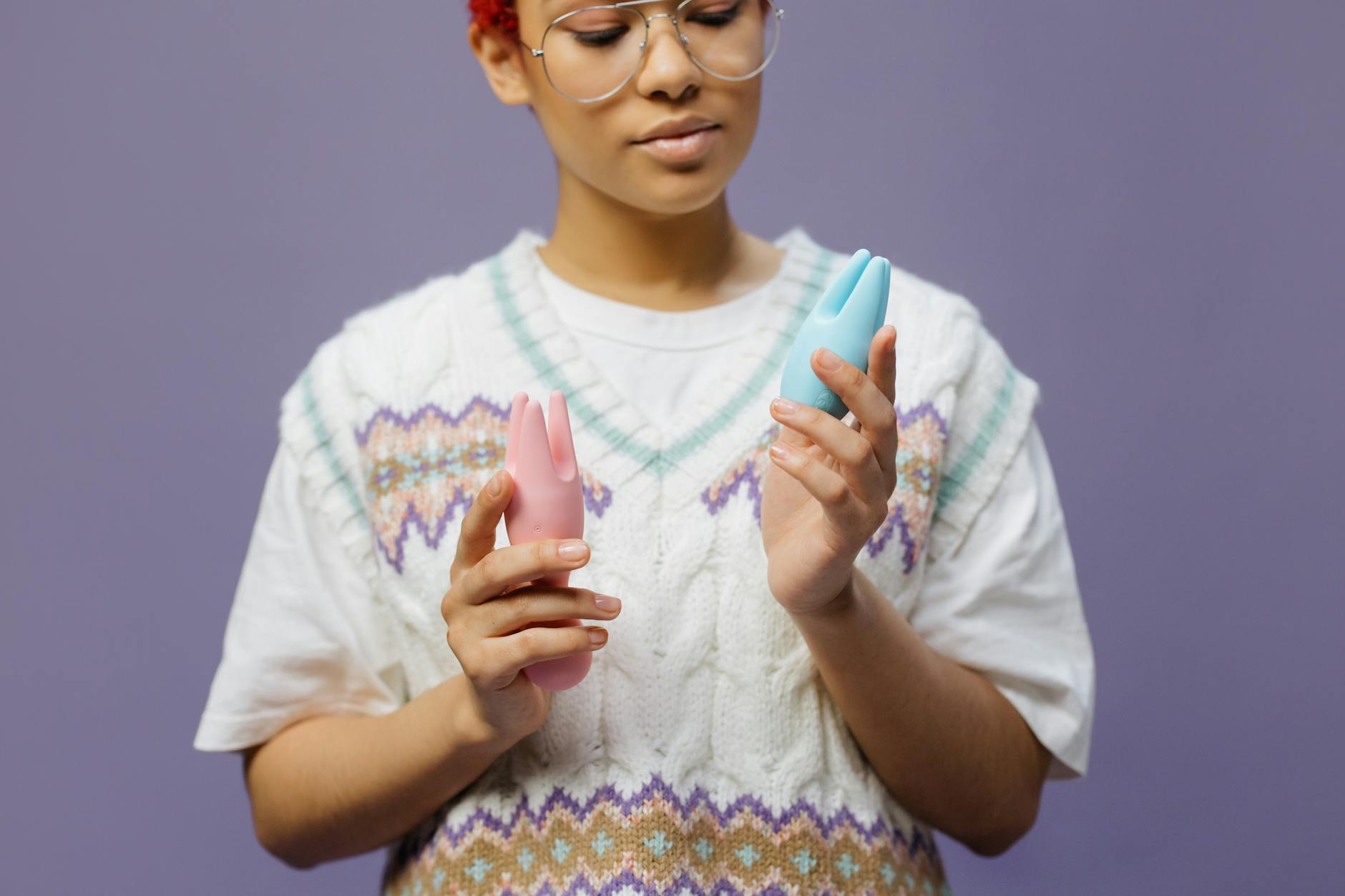
Show them the device. A lemon vibrator's design is elegant and less clinical than a wand. When a partner actually sees it, it becomes real and less threatening than whatever they imagined. You might say: "I've been researching what actually helps people orgasm during partnered sex, and this is designed for exactly that. I'd like to try it together."
Using a lemon vibrator during partnered sex
Start with a conversation about when and how. Some couples use it during penetration. Some use it as foreplay and build to partnered sex. Some use it as the main event, with manual stimulation from a partner elsewhere. There's no script.
Begin at a low setting. Pattern 1 or 2 on most lemon vibrators is gentler than you'd think, and you can build from there. Your partner can stay involved. They might touch you elsewhere, kiss you, watch, or stay present in other ways. The vibrator isn't a replacement for them. It's an addition.
One important note: if penetration is happening, water-based lubricant becomes even more critical. A vibrator can dry you out faster than expected, and some people with vulvas become more sensation-sensitive with a partner present. Silicone lube feels richer and lasts longer than water-based, but check your vibrator's material first. Most personal devices are silicone, so water-based is the safe choice.
The first time might feel weird. That's normal. Your nervous system is adjusting to something new. Give it three to five times before deciding if it's working. Anxiety about whether it'll work can actually block orgasm, so go in with curiosity, not pressure.
When your partner resists
Some people worry that a vibrator means they're not "enough." This comes from a deep place. Many people internalize the idea that their body should be enough to satisfy a partner, and vice versa. That's not how bodies work.
A useful reframe: "This lets me experience more pleasure with you. It's not taking something away from us. It's adding something." If resistance persists, couples therapy is genuinely worth exploring. A therapist can help unpack why the vibrator triggers shame or insecurity, because usually it's not really about the device.
If a partner is unwilling to engage even after conversation, you get to make a choice about what that means for your relationship. You deserve pleasure. You don't have to choose between a partner's comfort and your own orgasm. This isn't about ultimatums. It's about respect.
Building orgasm capacity, not faking it
Using a lemon clitoral vibrator with a partner isn't a workaround. It's part of retraining your nervous system to let go during partnered sex. Over time, many people find that the ease builds. Your body learns that it's safe to approach orgasm even with someone present. That muscle memory transfers.
Some people eventually orgasm partnered sex without the vibrator. Some never do, and that's fine. Either way, you've built pleasure into your partnership instead of avoiding it or resenting it.
The research is clear: couples who communicate about sex have more frequent orgasms and report higher satisfaction. When you introduce a tool like a lemon vibrator, you're not bypassing communication. You're making it real and specific. You're saying: "This is what I need. This is how we can both win."
Your orgasm matters. And the path to it doesn't need to look like anyone else's.
When to seek support
If you've never reached orgasm with anyone, ever, that's worth exploring with a sex therapist or gynecologist. Anorgasmia has medical and psychological roots, and a professional can help identify which is which. Vaginismus (involuntary pelvic floor tension) often blocks orgasm, as does pelvic floor tension that reduces arousal flow.
If orgasm is possible solo but disappears entirely with a partner, anxiety is the usual culprit. A therapist specializing in sexual anxiety can teach grounding techniques that lower the nervous system's threat response. This is actually very treatable.
If a partner's behavior makes you feel unsafe or ashamed about your sexuality, that's a relationship issue that goes beyond what a vibrator can fix. A lemon vibrator helps when the foundation is solid but the mechanics need adjustment. It doesn't repair fundamental respect or safety problems.
FAQ: Lemon vibrators and partnered orgasm
Will using a lemon vibrator during sex make me dependent on it?
No. Vibrators don't create physical dependency. They provide consistent sensation that your body recognizes and responds to. Over time, your nervous system often becomes more responsive to partner stimulation too, because the pressure drops. You're not training your body to need the vibrator. You're training it that pleasure with a partner is safe.
Is it normal that I orgasm with a toy but not with my partner?
Completely normal. Solo sex is different: no performance pressure, full attention on sensation, often a familiar routine. Partner sex adds psychological variables that block arousal for most people. A vibrator doesn't fix your body. It removes one barrier so your body can respond.
How do I know if the difficulty is psychological or physical?
If you orgasm solo, it's psychological, not physical. Your system works fine. The issue is arousal safety or nervous system state with a partner present. A sex therapist can help distinguish between anxiety, attention splitting, and pelvic floor tension. Most people benefit from a combination of tools and sometimes therapy.
What if my partner feels threatened by the vibrator?
This is about insecurity, not the device. A conversation focusing on inclusion helps: "I want this to bring us closer, not push you away." If resistance stays strong, a couples therapist can explore what the vibrator actually represents to them (inadequacy, loss of control, fear of change). Often that's worth untangling.
How do I bring up the vibrator without killing the mood?
Don't introduce it during sex. Have a calm, clothed conversation when you're both relaxed. That removes the pressure and gives your partner time to process. Then, when you're intimate next, you can reference that conversation briefly and move forward.
Can I use a lemon clitoral vibrator if I have vaginismus or pelvic floor tension?
Maybe, but carefully. If penetration or strong sensation triggers pain or involuntary tension, a vibrator might amplify that. Start with a professional assessment. Pelvic floor physical therapy or a sex therapist can guide whether a lemon vibrator is the right timing for you.
The gap between desire and orgasm in partnered sex isn't a personal failure. It's neurology. A lemon vibrator acknowledges that truth and builds pleasure into your relationship instead of eroding it. You deserve orgasms. Your partner deserves to know what helps. A good conversation and the right tool make both things possible.