
The comparison trap nobody talks about
Here's the thing: comparison doesn't always come from your partner's words. Sometimes it's a stray comment they made years ago. Sometimes it's something they said about an ex. Sometimes it's just a feeling you got from the way they reacted to your body or your pace. And once that seed is planted, it grows into something that blocks arousal entirely.
You're mid-kiss and suddenly you're thinking about whether you're doing this "right," or faster, or differently than someone else they've been with. That's not desire. That's self-editing in real time, and it's a pleasure killer.
The reason lemon vibrators and other clitoral toys matter here is not because they fix your relationship. They don't. What they do is teach your nervous system that pleasure can exist without comparison, without performance, and without an audience.
Why comparison shuts down arousal
When you're comparing yourself to someone else (a partner's ex, someone you saw in porn, an idealized version of yourself), your brain is running a threat assessment. This isn't about logic. Your nervous system thinks you're not enough, which activates your sympathetic nervous system. Fight, flight, freeze. Arousal requires parasympathetic activation. You literally cannot relax into pleasure when you're measuring yourself against an impossible standard.
This is especially true if the comparison came from your partner. Your brain links that voice, that body, that presence with judgment. Even if they didn't mean it that way, your body remembers.
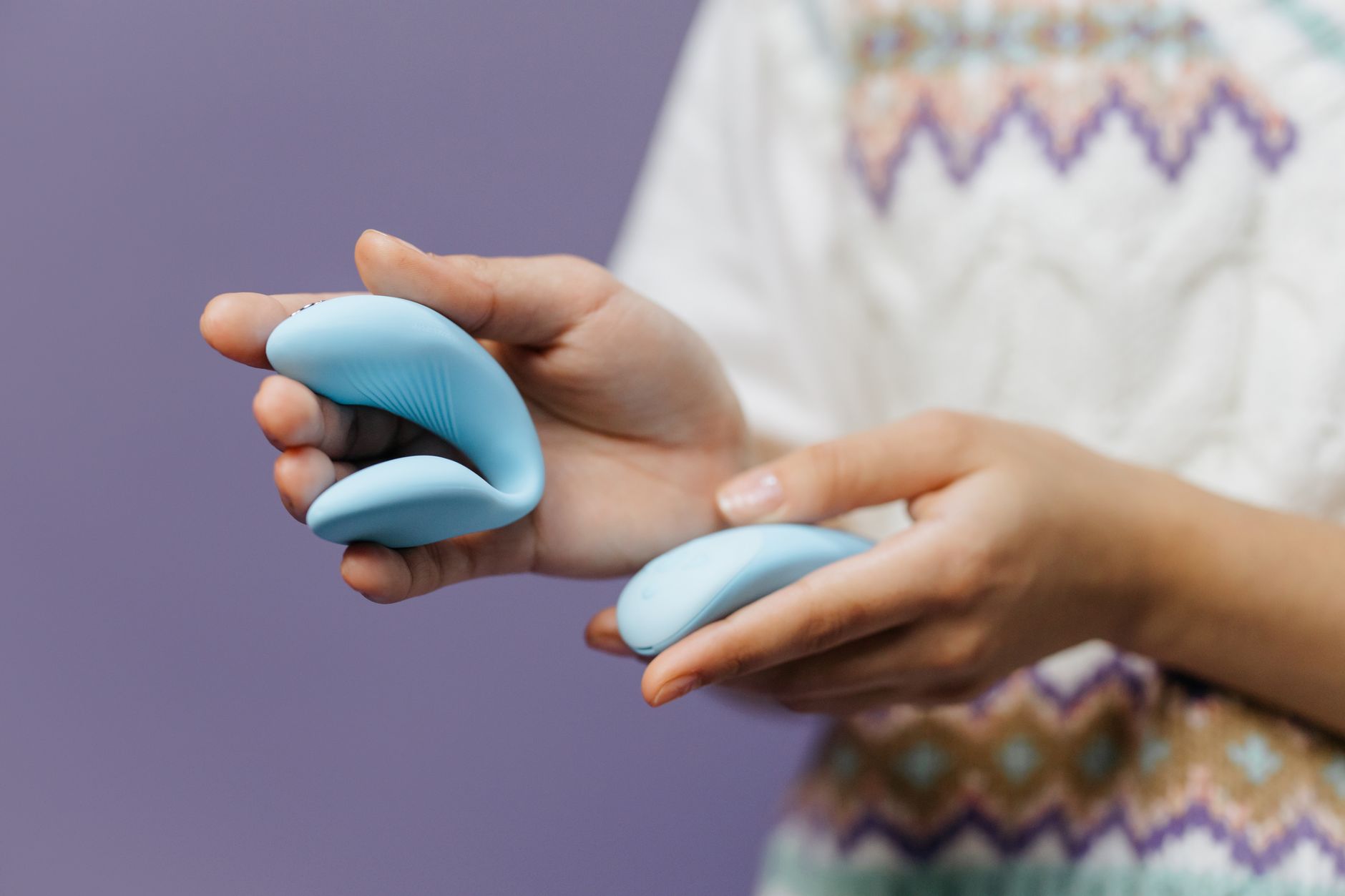
Photo by cottonbro studio on Pexels
The nervous system doesn't distinguish between a major betrayal and a casual comment. Both register as a threat to safety. And until you process that threat, arousal won't come back naturally.
Solo play as nervous system reset
When you use a clitoral vibrator alone, without anyone watching, without anyone's history in the room, something shifts. You're not performing for anyone. You're not meeting an expectation. There's no one to compare you to because there's no one there but you.
This is where lemon vibrators become genuinely powerful. The suction design on a device like the Lem means you're not relying on traditional vibration. You're experiencing a completely different kind of stimulation. That novelty matters. It doesn't carry the same associations as the kind of touch your partner uses. It's entirely yours.
Start here: set aside time when you're completely alone, when you know you won't be interrupted. Twenty minutes minimum. Not because you're on a deadline to orgasm, but because arousal needs time to build without pressure. The Lem's adjustable pattern range means you can start low and work up at your own pace. No one's watching the clock. No one's waiting for you to finish.
Pay attention to what you're thinking about. If comparison creeps in, don't fight it. Notice it. Then gently bring your attention back to sensation. What does this feel like? Where in your body are you feeling it? This is how you retrain your focus from performance to presence.
Rebuilding sensation separate from your partner
Many people find that solo pleasure becomes the foundation that makes partnered pleasure possible again. This might sound backwards. Shouldn't partnered sex just work better once the comparison anxiety goes away?
Not necessarily. Your body has learned an association. Your partner's touch triggers the threat response. You need to remember what pleasure feels like in a completely separate context before you can untangle it from judgment.
Use a lemon clitoral vibrator for at least two to four weeks solo before returning to partnered sex. Not as punishment. As recalibration. You're teaching your nervous system that your body produces pleasure reliably, independently, without comparison.
That knowledge changes everything. Because now, when your partner touches you, you're not desperate for validation that you're capable of pleasure. You already know you are. You've proven it to yourself dozens of times. That confidence is not arrogance. It's the opposite of comparison. It's knowing yourself.
When to bring it back into partnered time
Eventually, you might want to invite a lemon vibrator into the room with your partner. This is not the same as using one while they watch nervously. It's the same as using one because it feels good, and they're there, and you want them present but not in control.
Let them know the boundary in advance: "I want to use this, and I want you here, but I need you to just be present. Not directing, not watching intensely, just... here."
Many partners relax when they understand this is not about their performance. It's about your pleasure. And the Lem, with its focused suction design, often makes orgasms faster and more reliable, which many people find a relief rather than a threat.
If your partner responds with jealousy or pressure to control the experience, that's a separate conversation. That's about whether they can handle your autonomy. And that's not something a vibrator can fix.
The comparison conversation you actually need
At some point, you may want to address the comparison directly with your partner. Not to litigate what they said. To set a boundary about what you need going forward.
"When you made that comment about your ex, it landed differently than you meant. It made me question myself during sex. I need you to understand that comparisons, even casual ones, affect how safe I feel with you." Clear. No blame. Boundary.
Their response matters. A partner worth staying with will hear that and shift their behavior. A partner who minimizes it or gets defensive is telling you something important about whether they can meet your emotional needs.
Using a lemon vibrator isn't about proving anything to them. It's about proving to yourself that your pleasure is real, reliable, and yours alone.
Building confidence back, piece by piece
Recovering from comparison-triggered insecurity doesn't happen overnight. But it follows a pattern. First, you rediscover what arousal feels like solo. Then you trust that sensation. Then you start experimenting with inviting your partner back in, slowly, with boundaries.
Clitoral vibrators, especially ones with novel stimulation patterns like suction-based lemon vibrators, help break the mental loop because they're not part of the comparison script. You've never had sex with a partner using one, so there's no history loaded into it. It's neutral. It's yours.
The Lem's range of intensity patterns also means you control exactly how much stimulation you're getting at any moment. That control, that agency, rebuilds the part of you that the comparison took away. Your certainty that you know what you like and that you deserve to have it.
Confidence in your own pleasure is the fastest way to stop comparing yourself to anyone else. Because you're not measuring against an external standard anymore. You're measuring against yourself. And you become your own benchmark.
Questions people actually ask
Will using a vibrator alone make partnered sex feel weird or unsatisfying?
Actually, the opposite usually happens. When you know what intense pleasure feels like solo, you're less desperate to perform or prove something in partnered sex. You're more relaxed, which paradoxically makes the experience better. You can focus on connection instead of validation.
What if my partner sees the vibrator and feels threatened?
That depends on your relationship. Some partners are initially insecure but learn to adjust. Some have deep insecurity that a conversation won't fix. If your partner responds to "I want to reclaim my pleasure" with "You can't, because it threatens me," that's the real issue. The vibrator is just the mirror showing it.
Can a lemon vibrator really help if the comparison anxiety is about something bigger?
A vibrator is a tool, not therapy. If the comparison stems from trauma, deep insecurity, or a partner's repeated infidelity, you need professional support alongside it. But as part of rebuilding confidence and nervous system safety? Absolutely yes.
How long until I feel confident again?
Depends on how deep the comparison anxiety goes. Some people feel a shift after three solo sessions. Others need weeks. The key is consistency, not speed. You're retraining your nervous system, and that takes repetition.
Is it okay to use a vibrator if we're trying to improve our sex life together?
Yes. In fact, rebuilding solo confidence often is the fastest path to better partnered sex. You can't fix relationship intimacy from a place of insecurity. You have to stabilize yourself first.
What if I feel guilty using a toy when my partner is home?
Guilty about what? Your pleasure? Your autonomy? That guilt probably comes from the same place the comparison anxiety does. You've internalized the idea that your pleasure is conditional on performing it the "right" way. A vibrator, used unapologetically, is the antidote to that. Own it.
The long view
Comparison dissolves when you stop measuring yourself against anyone else. A lemon vibrator won't fix your relationship, but it will give you back something comparison took: the absolute knowledge that your body works, that you can produce pleasure, and that you don't need permission or validation to have it.
That knowledge changes how you show up in partnered sex. You're no longer performing out of desperation. You're there because you want to be. And that shifts everything.
If you're working through deeper relationship issues alongside the insecurity, or if your partner's behavior is repeatedly triggering comparison and self-doubt, talking to a couples counselor is worth the investment. The goal is not to fix the vibrator into the relationship. The goal is to fix the relationship so both of you can have pleasure freely.
Until then, you have permission to reclaim yours solo. The Lem and other clitoral vibrators are built for exactly this work. Use them. Unapologetically. Your confidence depends on it.