When sex stops being something you want
Let's be real: obligatory sex is one of the fastest routes to relationship disconnection. It's not just unfulfilling for you. It creates resentment. It teaches both of you that your pleasure doesn't matter. And over time, that message calcifies into the very foundation of your intimacy.
The problem isn't that you don't love your partner. It's that somewhere between the daily logistics of partnership and the weight of expectation, desire got crowded out. Your body has learned to respond with "I should" instead of "I want." And when that happens, no amount of talking usually fixes it.
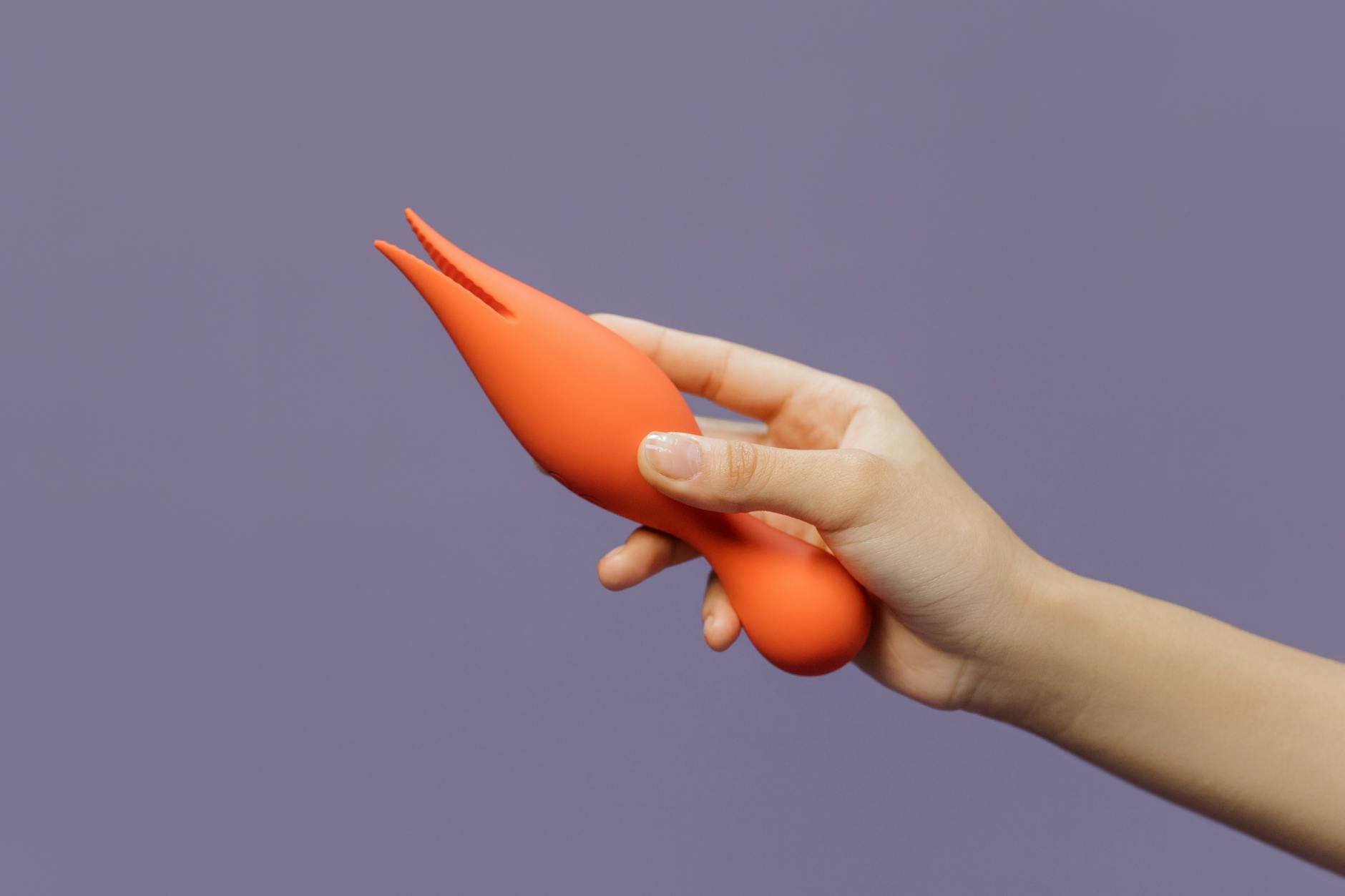
A clitoral vibrator like the Lemon can be the beginning of changing that. Not because a toy magically restores desire. But because it creates permission to feel pleasure on your own terms first. Once you remember what genuine arousal feels like when there's zero obligation attached, you can bring that back into partnership.
The neuroscience of obligatory sex
Your brain didn't decide to stop wanting sex. Your nervous system did.
When sex becomes something expected rather than desired, the anticipatory arousal pathway in your brain flattens. You're not being flooded with dopamine at the thought of intimacy. Instead, you're getting a shot of cortisol (stress hormone) when your partner signals readiness. Your body learns: sex equals performance, not pleasure.
Over months or years, this creates a feedback loop. Lower dopamine means lower motivation. Lower motivation means less natural arousal. Less arousal means needing more external stimulation just to feel anything. And if you're not getting that external stimulation because you're too focused on "getting through it," the loop tightens.
The fix isn't willpower or communication alone (though those help). It's interrupting the loop by reintroducing pleasure that has zero audience, zero expectation, and zero timer. Solo exploration with a tool like a lemon vibrator does exactly that.
Step one: separate solo pleasure from partnered sex
This is non-negotiable. If you're using a vibrator to "get ready" for your partner, you're still in performance mode. That's not the work we're doing.
Instead, schedule solo time with the explicit purpose of exploring what feels good to you. Not foreplay. Not preparation. An entirely separate experience. Twenty minutes. No partner expectation attached. Phone on silent. No clock-watching.
Start by touching yourself without the lemon vibrator. Notice what happens in your body without external stimulation. Where do you feel sensation naturally? Are there areas of your body that already know how to respond? Spend time there.
Then introduce the lemon vibrator on its lowest setting. The Lemon uses gentle suction stimulation, which works differently than direct vibration. It doesn't require intense pressure, which means your nervous system can relax more easily. Spend 10 to 15 minutes just getting reacquainted with what pleasure feels like when you're the only one making decisions.
If you don't orgasm, that's not the goal. The goal is remembering that arousal exists. That your body knows how to want things. That pleasure can be simple and selfish and still be valuable.
Step two: understand the difference between arousal and responsiveness
Here's what often happens in obligatory sex: your partner initiates, your body responds mechanically, and everyone pretends it's fine.
Responsiveness is not the same as arousal. Your body can become aroused (lubrication, increased heart rate, genital blood flow) without your brain being involved. It's reflex. When this is your only experience of sex, desire doesn't stand a chance.
When you use a lemon vibrator solo, you're intentionally cultivating arousal that starts in your brain. You're thinking about something. You're feeling desire first. Then your body follows. It's the reverse of obligatory sex, and it rewires the neural pathway.
Pay attention to what actually turns you on during solo time. Not what should turn you on. Not what your partner likes. What genuinely makes your nervous system light up. Images, fantasies, memories, sensations, sounds, or just the absence of demands. Write it down if it helps.
Then, and this matters: keep that information. This is the raw material for rebuilding desire in partnership.
Step three: set a boundary about initiation
Obligation thrives in the absence of boundaries. If your partner initiates whenever they feel like it and you feel pressured to comply, desire has nowhere to live.
You don't need to announce a sex strike. You need to reclaim initiation. That means sometimes saying no. And sometimes, crucially, saying yes because you want to, not because you feel trapped.
If you've been in obligatory sex for months or years, your nervous system might not even register "wanting" sex right now. That's okay. The reclamation process is slow. But the first step is telling your partner something like: "I need to feel like I'm choosing this, not expected to do this. I'm going to let you know when I'm interested. I'm asking you to let that be enough."
That might mean less frequent sex initially. Good. Better that than sex that erodes your sense of self.
Step four: use the lemon vibrator to explore partnered pleasure differently
Once you've rebuilt a relationship with solo arousal (usually takes a few weeks of consistent exploration), you can bring the lemon vibrator into partnership.
But here's the key: you get to direct it. Your partner doesn't. Whether your partner is a man, woman, or anyone else, this is about you maintaining agency.
You might incorporate it during partnered sex. You might use it while your partner is inside you, focusing entirely on clitoral sensation instead of penetrative pleasure. You might use it while your partner stimulates you differently. Or you might ask your partner to hold it while you guide pressure and speed. The script is yours.
Many couples find that introducing a lemon vibrator actually shifts the entire dynamic because it makes it impossible to operate on autopilot. Suddenly, the focus is on what feels good to you right now. Not what's supposed to feel good. Not what usually happens. What actually feels good in this moment.
That presence alone changes everything.
Step five: talk about obligation directly
Eventually, you and your partner need to name what's been happening. Not in accusatory mode. In honest, vulnerable mode.
"I realized I've been having sex because I felt I should, not because I wanted to. I don't think that's serving either of us. I want to rebuild desire, but that means things need to change." That conversation is hard. It's also necessary.
If your partner responds defensively or pressures you to go back to obligatory sex, that's not a desire problem. That's a respect problem. And no vibrator, no matter how good, fixes that. You might need a relationship therapist or a serious reckoning about whether this partnership works.
But most partners, when they understand that obligatory sex is hurting both of them, actually want to change. They just didn't know it was an option.
The lemon vibrator as a reclamation tool
A lemon clitoral vibrator isn't the solution to obligatory sex. You are. But it can be a powerful support while you rebuild desire.
It creates space for pleasure without audience. It teaches your nervous system that sensation can be uncomplicated. It reminds you that your body knows how to want things when the pressure is off.
Start solo. Stay there long enough to feel the difference. Then, only when you're ready and clear on your own terms, bring it into partnership. Your pleasure matters. Not as an obligation to anyone else. As a baseline requirement for your own life.
People also ask
How long does it take to rebuild desire after obligatory sex?
It depends on how long you've been operating in obligation mode and how responsive you are to solo exploration. Most people notice a shift within 3 to 4 weeks of consistent solo time with a lemon vibrator or similar tool. Real desire rebuilding, the kind that lasts, usually takes 2 to 3 months. Be patient with yourself. Your nervous system is learning something new.
Can using a vibrator solo actually make sex with my partner feel better?
Absolutely. When you reconnect with what arousal feels like on your own, you bring that clarity into partnership. You're not starting from zero every time. You know what your body needs. You can communicate it. That knowledge is magnetic. Your partner responds to your genuine desire in a completely different way than they respond to obligation.
What if my partner feels threatened by me using a vibrator?
That's worth exploring with your partner, ideally with a couples therapist. A secure partner understands that your solo pleasure isn't a threat to partnership. It's a foundation for better partnered pleasure. If your partner's insecurity is preventing you from rebuilding your own desire, that's a relationship issue that needs to be addressed directly. Your pleasure isn't negotiable.
Is it okay to use a lemon vibrator during partnered sex if I have low desire?
Yes, with the caveat that you're using it to reconnect with your own pleasure, not to perform for your partner. If the vibrator helps you access genuine arousal during partnered sex, that's different from using it to "get through" obligatory sex faster. One is reclamation. One is just a band-aid. Know which one you're doing.
How do I know if my low desire is about obligation or something else?
Ask yourself: when I have time completely alone, without expectations, do I feel any interest in pleasure? If yes, it's likely obligation. If no, it might be hormonal, medical, or trauma-related. The first situation is fixable with what we've talked about. The second requires a doctor or therapist. Don't assume. Get curious about your own body.
Can a partner use a lemon vibrator on me without me losing agency?
Yes, if you're directing it. If you're telling them where, how much pressure, and how long. The second your partner is making those decisions while you're just receiving, you're back in passive mode. Make it active. Make it about what you want. That's the boundary that matters.
The path forward
Obligation is a relationship killer. The good news: it's reversible. It requires you to reclaim your own pleasure first. To remember that desire is a biological signal, not a moral obligation. To understand that saying no to sex you don't want is actually protecting partnership, not harming it.
A lemon vibrator can be part of that reclamation. Solo exploration can be part of it. Clear communication can be part of it. What makes the difference is you deciding that your pleasure matters enough to fight for it.
Your body knows what it wants when the pressure is off. That knowledge doesn't disappear. It just gets quiet. Use whatever time and tools you need to listen again.